
The Container guide from Coin Container summarises what you should know before buying or renting a container: which types exist, how large they are, in what condition they come, what they cost, whether a building permit is required and how a container is converted. Each chapter answers the question briefly; the linked detailed guides go into more depth.
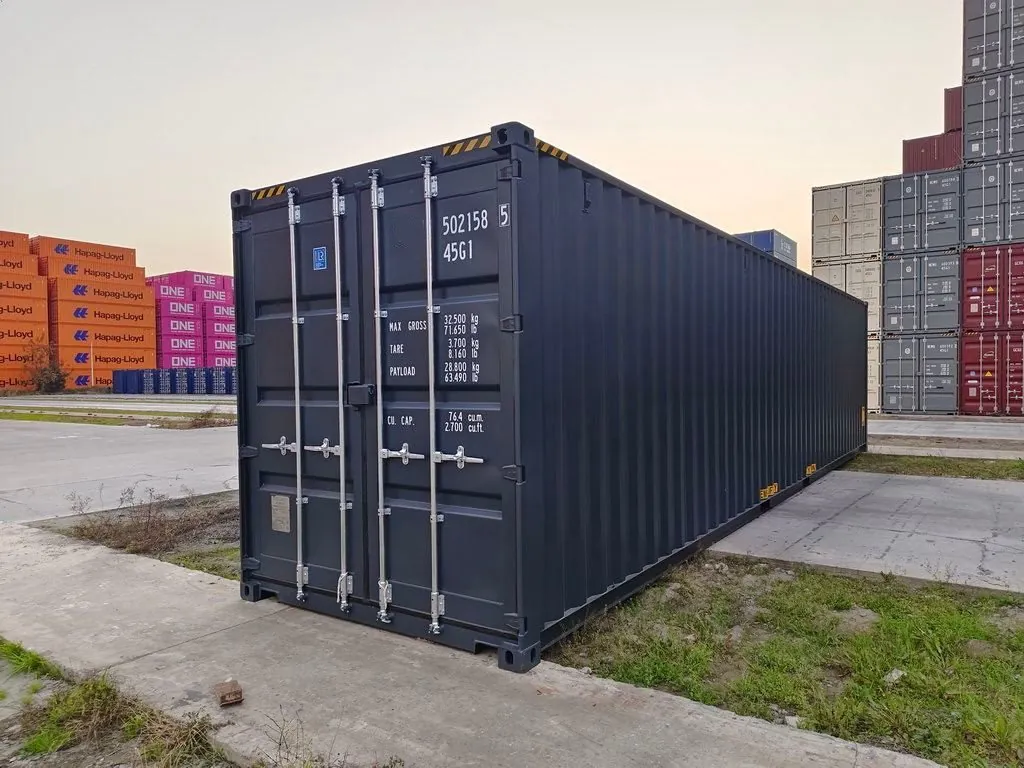
Container types at a glance
The standard container (20 and 40 ft, also available as High Cube) is the most widely used design for storage, transport and conversion. There are also refrigerated and insulated containers for temperature-controlled goods, special containers (Open Top, Open Side, Flat Rack, Double Door) for bulky cargo, and office and sanitary containers for walk-in solutions. The complete overview with purchase options: Buy shipping containers.
Container dimensions and sizes
A 20 ft container holds about 33 m³, a 40 ft about 67 m³, and the High Cube about 76 m³. When loading, the door opening (approx. 2,34 m wide) is often the deciding factor. All external and internal dimensions, door openings and weights: Container dimensions and sizes.
| containers | Volume (approx.) |
|---|---|
| 20 ft | 33 m³ |
| 40 ft | 67 m³ |
| 40 ft High Cube | 76 m³ |
New, used or one-way? Condition grades
Used containers in "Wind and Watertight" condition are sufficient for outdoor storage; "Cargo Worthy" is additionally suitable for overseas transport. A one-way container has only made a single sea voyage and looks almost new. Details and inspection checklist: buy used shipping containers.
How much does a container cost?
The price depends on size, condition, availability and transport distance. Typical prices, a worked example of the total cost and the price factors: How much does a shipping container cost.
Buying or renting?
Rule of thumb: beyond about 12 to 18 months of use, buying is cheaper than renting. For time-limited projects, renting is more flexible. The full comparison with a calculation example: Buy or rent a container. To the rental overview: Rent a container.
Does a container need a building permit?
That depends on use, size, duration and federal state. A storage container in a garden is often exempt from the permit procedure, while a permanently used living or working space almost always requires a permit. All cases: Shipping container building permit.
Delivery and placement
Containers are delivered by truck with a loading crane, by tilt chassis or by low-loader. You need a load-bearing, level surface and clear access. Exactly how much space is needed and how the delivery day works: Have a shipping container delivered and offloaded and Container transport and logistics.
Converting and fitting out containers
From a site office to a sauna: containers can be customised with doors, windows, insulation, electrics and paint. Ideas with an effort assessment: Converting shipping containers. On insulation: Insulating containers. We organise the conversion for you: Container conversion.
Condensation, summer and winter – using containers correctly
Unventilated steel sweats and heats up. How to avoid condensation: Avoiding condensation in containers. What helps in heat and frost: Containers in summer and winter.
ISO containers and CSC plate
Shipping containers are standardised according to ISO 668, so they fit on any ship and any truck worldwide. The CSC plate certifies safety for transport and is mandatory for overseas use. More on this: ISO containers explained simply.
Securing a container: the right lock
The original locking bars do not protect against theft. How much protection each additional lock (lock box, bolt lock, electronic) offers and whether it is welded or bolted on: Container locks – types and installation. More accessories: Container accessories.
Common mistakes when buying a container
Buying too small, not checking the condition, underestimating transport, forgetting the permit: costly mistakes when buying a container. And how to spot unreliable sellers and fake shops before any money changes hands: Buying shipping containers safely.
Look up technical terms
CSC plate, High Cube, Cargo Worthy, twistlock, thermal bridge: the most important container terms, briefly explained in the Container glossary.
Frequently asked questions
How much does a container hold?
A 20 ft container holds about 33 m³, a 40 ft about 67 m³, and the 40 ft High Cube about 76 m³. When loading, the door opening, approx. 2,34 m wide, is often what matters.
Is a used container in "Wind and Watertight" condition sufficient?
For outdoor storage, yes. "Cargo Worthy" is additionally seaworthy, while a one-way container has made only one sea voyage and looks almost new.
Does a container need a building permit?
That depends on use, size, duration and federal state. A container used purely for storage is often assessed differently from a container in which people stay. All cases: Shipping container building permit.
Consultation
Not sure yet which container suits your project? Tell us the intended use and we will recommend size, condition and equipment. Request a quote · Buy a container · Rent a container
Last updated: 15 October 2026 · Editor: Coin Container Team, Hamburg